📞 7796677877 📍 First floor, B-Wing, Estonia, opp. Verandah hotel, Swaroop Society, Vakil Nagar, Erandwane, Pune, Maharashtra 411004
Comprehensive Eye Examination: What It Includes and Why It Matters
Learn what a comprehensive eye examination includes, why regular eye exams matter, which tests are performed, and when you should see an eye specialist in Pune.
8/15/202611 min read

Comprehensive Eye Examination: What It Includes and Why It Matters
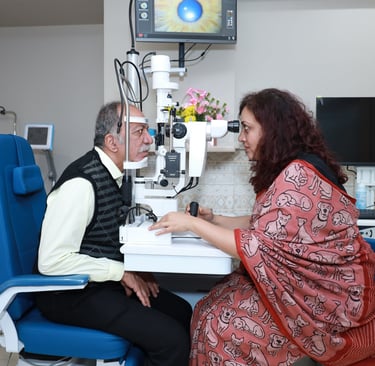
Your eyes can provide important clues about your vision and overall eye health. Yet many eye conditions can develop gradually without obvious symptoms in their early stages. That is why an eye examination is not only about checking whether you need glasses. A properly performed comprehensive eye examination evaluates different parts and functions of the eye and can help identify problems that may require monitoring, treatment, or further specialist assessment.
A complete eye examination may assess visual acuity, refractive error, eye pressure, the front and back of the eye, the optic nerve, retina, and other structures depending on your age, symptoms, medical history, and risk factors. A glaucoma-focused comprehensive examination, for example, can include visual acuity, pupil examination, anterior-segment assessment, intraocular pressure measurement, optic nerve examination, and fundus examination.
At Athavale Eye Care & Retina Centre in Erandwane, Pune, comprehensive eye care is provided with an emphasis on prevention, timely diagnosis, evidence-based treatment, and patient education. The centre provides care across areas including retina care, cataract surgery, glaucoma management, pediatric ophthalmology, oculoplasty, and diabetic retinopathy.
But what exactly happens during a comprehensive eye examination? And why should you have one even when your vision seems normal?
Let's take a closer look.
What Is a Comprehensive Eye Examination?
A comprehensive eye examination is a detailed assessment of your eyes and vision performed by an eye-care professional.
Unlike a simple vision screening, which may primarily determine whether you can see clearly at particular distances, a comprehensive examination can evaluate both how well you see and whether your eyes show signs of disease or abnormality.
Depending on your individual needs, an eye examination may include:
Medical and eye-health history
Visual acuity testing
Refraction
Pupil examination
Eye movement and alignment assessment
Examination of the eyelids and surrounding structures
Slit-lamp examination
Intraocular pressure measurement
Examination of the optic nerve
Retinal and fundus examination
Dilated eye examination when indicated
OCT or other retinal imaging when clinically appropriate
Additional tests based on symptoms or suspected conditions
The exact tests are not necessarily identical for every patient. Your age, symptoms, family history, existing medical conditions, medications, previous eye problems, and examination findings help determine which tests are appropriate.
Why Is a Comprehensive Eye Examination Important?
1. It Can Detect Eye Problems Before You Notice Symptoms
One of the most important reasons for regular eye examinations is that some eye diseases may progress without causing noticeable symptoms in their early stages.
A person may feel that their eyesight is normal while an eye examination identifies an abnormality requiring monitoring or treatment.
This is particularly relevant to conditions such as glaucoma, retinal disease, and diabetic eye disease.
For example, glaucoma can damage the optic nerve and may lead to permanent vision loss. A comprehensive examination that includes assessment of eye pressure, the optic nerve, and the fundus can form an important part of glaucoma evaluation.
The absence of symptoms does not always mean the absence of eye disease.
2. It Checks More Than Your Glasses Prescription
Many people associate an eye check-up with determining their spectacle number.
Refraction is certainly an important component of an eye examination, but it is only one part of comprehensive eye care.
Your eye specialist may assess whether your blurred vision is caused by:
Myopia
Hyperopia
Astigmatism
Presbyopia
Cataract
Corneal abnormalities
Retinal disease
Optic nerve problems
Other ocular conditions
A new spectacle prescription may improve vision when refractive error is the primary problem. However, if an underlying eye condition is contributing to reduced vision, simply changing glasses may not address the cause.
That is why a complete evaluation can be valuable.
What Does a Comprehensive Eye Examination Include?
The exact sequence can vary between patients and clinics. However, these are some of the most common components.
1. Medical and Eye History
Your eye examination usually begins with questions about your health and vision.
Your ophthalmologist may ask about:
Current vision problems
Blurred or distorted vision
Eye pain
Redness
Headaches
Flashes or floaters
Difficulty seeing at night
Light sensitivity
Previous eye surgery
Previous eye injuries
Existing eye diseases
Family history of eye disease
Diabetes or other medical conditions
Current medications
Be as accurate as possible when answering these questions.
Your general health can be relevant to your eye health. Conditions such as diabetes, for example, can affect the retina.
2. Visual Acuity Test
Visual acuity testing measures how clearly you can see.
You may be asked to read letters, numbers, or symbols from a standard chart at a specified distance.
Testing may be performed:
With your current glasses
Without glasses
With contact lenses where appropriate
At distance
At near when clinically indicated
The result helps your eye specialist determine whether your vision is within an expected range and whether further evaluation is required.
3. Refraction and Glasses Power Assessment
Refraction determines whether you have a refractive error and helps establish the appropriate optical correction.
Common refractive errors include:
Myopia
Myopia, commonly called short-sightedness or near-sightedness, makes distant objects appear blurred.
Hyperopia
Hyperopia, or long-sightedness, can affect the ability to focus comfortably, particularly for near tasks.
Astigmatism
Astigmatism occurs when the eye's optical system has an irregular curvature, potentially causing blurred or distorted vision.
Presbyopia
Presbyopia is an age-related change in near focusing ability. It commonly becomes noticeable as people get older and may result in difficulty reading or performing close-up tasks.
A refraction helps determine whether glasses or contact lenses may improve your vision.
However, a comprehensive eye examination goes beyond determining the spectacle number.
4. Pupil Examination
The pupils are examined to assess how they respond to light and whether their responses are symmetrical.
Changes in pupil reactions can sometimes provide useful information about the visual pathway and neurological function.
This is one reason a comprehensive eye examination involves more than simply reading an eye chart.
5. Eye Alignment and Movement Assessment
Your eye specialist may evaluate how your eyes move and work together.
This can help identify problems involving:
Eye alignment
Binocular vision
Eye movement
Strabismus
Double vision
Eye alignment and movement are particularly important in children, because untreated visual problems during childhood can affect normal visual development.
Athavale Eye Care & Retina Centre provides pediatric ophthalmology services, with the clinic noting the importance of early eye examinations for detecting conditions that can affect children's visual development.
6. Slit-Lamp Examination
A slit lamp is a specialized microscope used to examine the structures at the front of the eye in detail.
Depending on the examination, the doctor may assess structures such as:
Eyelids
Conjunctiva
Cornea
Anterior chamber
Iris
Lens
This examination can help identify abnormalities that may not be visible during a basic vision test.
It can be particularly useful when evaluating conditions such as cataract, corneal problems, inflammation, and other anterior-segment conditions.
7. Eye Pressure Measurement
Eye pressure, also called intraocular pressure or IOP, may be measured during an eye examination.
Measuring IOP is particularly relevant when assessing glaucoma risk.
Importantly, eye pressure is only one component of glaucoma evaluation. A comprehensive glaucoma assessment can also involve examination of the optic nerve, fundus, anterior segment, and other relevant structures.
Therefore, an eye-pressure measurement by itself should not be considered a complete eye examination.
8. Optic Nerve Examination
The optic nerve carries visual information from the eye to the brain.
Your ophthalmologist may examine the optic nerve for signs of structural changes or damage.
Optic nerve evaluation is particularly important when glaucoma is suspected or when a patient has risk factors for optic nerve disease.
A comprehensive examination can combine optic nerve findings with eye pressure measurements, visual function, and other investigations to build a more complete clinical picture.
9. Retinal and Fundus Examination
The retina is the light-sensitive tissue located at the back of the eye.
A retinal examination allows the ophthalmologist to evaluate the retina, blood vessels, macula, optic nerve, and surrounding structures.
This is particularly important for people with risk factors for retinal disease.
Retinal problems can include:
Diabetic retinopathy
Retinal tears
Retinal detachment
Age-related macular degeneration
Macular disorders
Vitreous haemorrhage
Other retinal abnormalities
Athavale Eye Care & Retina Centre provides specialized retina care and lists conditions including diabetic retinopathy, retinal detachment, age-related macular degeneration, macular hole, vitreous haemorrhage, and retinopathy of prematurity among conditions managed by the centre.
10. Dilated Eye Examination
In some patients, the ophthalmologist may recommend dilating the pupils using eye drops.
Dilation allows a more detailed examination of the internal structures of the eye, particularly the retina and optic nerve.
Whether dilation is required depends on factors such as:
Age
Symptoms
Medical history
Diabetes
Retinal risk factors
Family history
Examination findings
The reason for the visit
A dilated examination is especially useful when a detailed assessment of the posterior segment is needed.
For example, comprehensive dilated eye examination is an important component of cataract evaluation when possible, with attention also given to the health of the cornea, lens, optic nerve, and retina.
11. OCT: Optical Coherence Tomography
Depending on the clinical situation, your ophthalmologist may recommend Optical Coherence Tomography (OCT).
OCT is an advanced imaging technology that produces detailed cross-sectional images of ocular tissues.
It can be particularly useful when evaluating the retina and optic nerve.
At Athavale Eye Care & Retina Centre, OCT and OCT angiography are listed among the centre's advanced retinal diagnostic and treatment technologies.
OCT may be recommended when your doctor needs more detailed information than can be obtained from a routine examination alone.
12. OCT Angiography
OCT angiography, or OCT-A, is an imaging technique that can help visualize blood-flow patterns within retinal and choroidal vascular networks.
It may be useful in the evaluation and monitoring of selected retinal and vascular conditions.
Not every patient needs OCT-A. Your ophthalmologist will determine whether advanced retinal imaging is appropriate based on your symptoms, examination findings, and medical history.
13. Additional Eye Tests When Needed
A comprehensive eye examination does not mean that every patient receives every possible eye test.
Additional investigations may be recommended when clinically indicated.
These may include tests related to:
Visual fields
Corneal evaluation
Retinal imaging
Glaucoma assessment
Cataract evaluation
Macular disease
Diabetic eye disease
Pediatric eye conditions
Preoperative assessment
The goal is not to perform unnecessary tests. The goal is to select appropriate investigations that help answer a clinical question.
Who Should Have a Comprehensive Eye Examination?
A comprehensive eye examination can be useful for people of different ages and backgrounds.
Children
Children's eyes play an important role in learning and development.
Early identification of problems such as refractive errors, strabismus, or other visual abnormalities can be important for normal visual development.
Children may need an eye examination when:
Parents notice an eye turn
The child frequently squints
The child sits unusually close to screens or books
There are complaints of headaches or visual difficulty
School performance raises concerns about vision
There is a family history of certain eye conditions
An eye examination is recommended by a pediatrician, teacher, or eye specialist
Adults
Adults may benefit from regular eye evaluations even if they do not currently wear glasses.
An eye examination can help identify refractive changes and age-related or disease-related eye conditions.
People who spend significant time working on computers or digital devices should also pay attention to symptoms such as:
Eye fatigue
Dryness
Intermittent blurred vision
Headaches
Difficulty focusing
These symptoms can have multiple causes, so persistent symptoms should be evaluated rather than automatically attributed to screen use.
People With Diabetes
Diabetes can affect the blood vessels of the retina and may lead to diabetic retinopathy.
Regular eye evaluation is particularly important for people living with diabetes because retinal disease can progress before significant vision loss becomes noticeable.
Athavale Eye Care & Retina Centre specifically provides care for diabetic retinopathy and diabetic macular edema, including retinal treatments and intravitreal injections where clinically indicated.
If you have diabetes, follow the eye-screening schedule recommended by your treating physician and ophthalmologist.
Older Adults
Age can increase the likelihood of certain eye conditions, including:
Cataract
Glaucoma
Age-related macular degeneration
Other retinal conditions
Changes in vision should not simply be considered an unavoidable part of getting older.
A comprehensive examination can help determine whether reduced vision is related to a refractive change, cataract, retinal disease, glaucoma, or another condition.
People With a Family History of Eye Disease
Family history can be relevant to the risk of certain eye conditions.
If close relatives have had glaucoma, retinal disease, severe myopia, or other significant eye conditions, tell your ophthalmologist.
Your doctor can consider your family history when deciding what examinations or monitoring may be appropriate.
What Is the Difference Between an Eye Screening and a Comprehensive Eye Examination?
This is an important distinction.
Eye Screening
A screening is generally designed to identify people who may need further evaluation.
Comprehensive Eye Examination
A comprehensive examination is a more detailed clinical evaluation of your vision and eye health.
A screening may tell you that further assessment is needed, while a comprehensive examination can investigate why a problem may be present.
If you have symptoms, risk factors, or a known eye condition, do not rely solely on a basic vision screening.
How Often Should You Have an Eye Examination?
There is no single schedule that is appropriate for everyone.
The recommended frequency depends on:
Age
Existing eye conditions
Diabetes
Family history
Previous eye surgery
Medications
Symptoms
Risk factors for glaucoma or retinal disease
Your ophthalmologist's recommendations
Someone with a known eye condition may need substantially more frequent monitoring than a healthy person with no risk factors.
Your ophthalmologist can recommend an examination schedule based on your individual circumstances.
Symptoms That Mean You Should See an Eye Specialist
Do not wait for a routine appointment if you develop sudden or concerning visual symptoms.
Seek prompt medical assessment for symptoms such as:
Sudden loss of vision
Sudden increase in floaters
Flashes of light
A curtain or shadow across your vision
Significant eye pain
Sudden severe blurred vision
New double vision
Sudden distortion of straight lines
Significant redness accompanied by pain or visual changes
Some retinal conditions, including retinal tears or retinal detachment, can require urgent assessment.
When it comes to sudden changes in vision, early evaluation matters.
How to Prepare for a Comprehensive Eye Examination
A little preparation can make your appointment easier.
Bring Your Current Glasses
If you wear spectacles, bring them to your appointment.
Bring Previous Eye Reports
Previous prescriptions, OCT scans, retinal photographs, surgical records, and other reports can help your ophthalmologist understand changes over time.
Prepare Your Medical History
Tell your doctor if you have:
Diabetes
Hypertension
Previous eye surgery
Previous eye injury
Known glaucoma
Retinal disease
Other significant medical conditions
Bring Your Medication Information
Provide information about medications you currently take, particularly if your doctor asks for a complete medical history.
Mention Any New Symptoms
Even symptoms that seem minor may be clinically relevant.
Tell your ophthalmologist about:
Blurred vision
Floaters
Flashes
Pain
Dryness
Distortion
Light sensitivity
Difficulty seeing at night
What Happens After the Eye Examination?
After completing the examination, your ophthalmologist will discuss the findings with you.
Depending on the results, you may receive:
A new spectacle prescription
Advice regarding eye care
A recommendation for observation
Additional diagnostic testing
Medication
Referral to a subspecialist
Laser treatment
Surgical evaluation
Follow-up monitoring
If an eye condition is identified, your doctor can explain the available treatment or monitoring options and discuss the appropriate next step.
Comprehensive Eye Examination at Athavale Eye Care & Retina Centre, Pune
At Athavale Eye Care & Retina Centre, comprehensive eye care is built around prevention, timely diagnosis, evidence-based treatment, and patient education. The centre is located in Erandwane, Pune, and offers ophthalmic services including retina care, pediatric ophthalmology, glaucoma management, cataract surgery, oculoplasty, and diabetic retinopathy care.
The clinic also lists advanced diagnostic and treatment capabilities including:
Optical Coherence Tomography (OCT)
OCT Angiography
Retinal laser treatment
Multispot and subthreshold laser treatments
Intravitreal injections
Micro-Incision Vitreous Surgery (MIVS)
Low vision aids and rehabilitation
The availability of a particular test or treatment depends on the patient's clinical condition and the ophthalmologist's assessment.
The centre's stated approach emphasizes ethical, rational, evidence-based eye care and patient comfort.
Frequently Asked Questions About Comprehensive Eye Examinations
Is a comprehensive eye examination the same as a glasses test?
No. A glasses test primarily evaluates refractive error and determines an appropriate optical prescription. A comprehensive eye examination can assess vision as well as the health of different eye structures.
Can an eye examination detect glaucoma?
A comprehensive examination can help identify findings associated with glaucoma and determine whether further glaucoma evaluation is required. Assessment may include eye pressure, optic nerve examination, fundus evaluation, and other tests depending on the patient.
Can an eye examination detect retinal problems?
Yes. Examination of the retina and, when appropriate, retinal imaging can help identify retinal abnormalities. Additional imaging such as OCT may be recommended when clinically indicated.
Do all eye examinations require pupil dilation?
No. Dilation is not necessarily required for every patient at every visit. Your ophthalmologist will determine whether a dilated examination is appropriate based on your age, symptoms, risk factors, and clinical findings.
Is OCT required during every eye check-up?
No. OCT is an advanced diagnostic test and is recommended when it can provide clinically useful information. It is not automatically required for every routine eye examination.
How long does a comprehensive eye examination take?
The duration varies depending on the patient's age, symptoms, examination findings, and whether additional diagnostic tests or dilation are required.
Can children have comprehensive eye examinations?
Yes. Children can undergo eye examinations appropriate for their age and symptoms. Pediatric eye assessments can help identify conditions that may interfere with normal visual development.
Should people with diabetes have regular eye examinations?
People with diabetes should have eye examinations according to the schedule recommended by their healthcare and eye-care professionals. Diabetes can affect the retina, sometimes before noticeable visual symptoms occur.
When should I see an ophthalmologist instead of only getting new glasses?
If you have persistent visual symptoms, sudden vision changes, eye pain, flashes, new floaters, distortion, a history of eye disease, diabetes, or other risk factors, you should have an appropriate medical eye evaluation rather than relying only on a spectacle-power check.
Key Takeaway: Don't Wait Until Your Vision Changes
A comprehensive eye examination is about more than finding the right glasses.
It is an opportunity to evaluate your vision, examine the health of your eyes, identify potential problems, monitor known conditions, and determine whether additional investigation or treatment is necessary.
Many eye conditions can develop gradually, and some may not cause obvious symptoms at first. Regular, appropriately timed eye examinations can therefore play an important role in protecting long-term vision.
If you are experiencing changes in vision or have risk factors for eye disease, speak with an ophthalmologist about the right examination schedule for you.
Looking for Comprehensive Eye Care in Pune?
Athavale Eye Care & Retina Centre is located in Erandwane, Pune, and provides comprehensive ophthalmic and subspecialty eye care, including retina care, glaucoma management, cataract surgery, pediatric ophthalmology, oculoplasty, and diabetic retinopathy services.
Address: First Floor, B-Wing, Estonia, opposite Verandah Hotel, Swaroop Society, Vakil Nagar, Erandwane, Pune, Maharashtra 411004.
Phone: 7796677877
Clinic Hours listed on the website: Monday–Saturday, 4:00 PM–6:00 PM.
For an eye examination, contact the clinic to discuss your symptoms and appointment requirements.
Contact
📞 7796677877
📍 First floor, B-Wing, Estonia, opp. Verhandah hotel, Swaroop Society, Vakil Nagar, Erandwane, Pune, Maharashtra 411004
Dr Vrushali Athavale is a fourth-generation ophthalmologist and retina specialist in Pune. Discover her approach to advanced, ethical, and personalised eye care.

© 2026. All rights reserved. Designed & Promoted by Discovery Media